You are paid a percentage of annualized premium at your contract level, most of it advanced before it is earned — which means a policy that lapses in month four takes money back out of you. Here is every structure, every clawback, and what to ask before you sign a contract you cannot leave.
Flat from $30/mo, or $25/mo billed yearly · 14-day free trial · no seat minimums, no contract required
Ask a roofer how they are paid and you get a percentage of the job. Ask a final expense agent and the correct answer is a percentage of annualized premium — the monthly premium multiplied by twelve — at whatever contract level they hold with that carrier.
Work a real example. You write a 68-year-old non-tobacco woman on a simplified issue whole life policy at $58 a month. That is $696 of annualized premium. On a 100 percent contract, your first-year commission is roughly $696. On a 115 percent contract it is roughly $800. On a captive contract that supplies your leads for free it might be $350. Same client, same policy, same fifteen minutes at the kitchen table.
Two consequences fall straight out of that. First, the face amount is almost irrelevant to your pay — a 78-year-old buying $8,000 of coverage can produce more premium, and therefore more commission, than a 58-year-old buying $15,000. Second, your contract level is not a detail, it is most of your income. A twenty-point difference on a book of $150,000 of annualized premium is $30,000 a year for identical work.
Most carriers will advance you a portion of that first-year commission as soon as the policy is issued and the first draft clears, and many pay daily or weekly. A common shape is a percentage of six, nine or twelve months of premium up front, with the rest paid out as the client keeps paying. That is what makes this trade survivable — it is how agents fund next week's mail drop.
It is also the trap. An advance is not earnings, it is a receivable the carrier has fronted you against premium that has not been paid yet. If that client stops drafting in month four, the unearned portion comes back. Take a big advance while your persistency is unproven and you are effectively borrowing against your own future close rate.
Typical shapes and typical ranges. Treat these as orientation for a conversation, not as quotes.
| Component | How it pays | Typical range | What it does to your behaviour |
|---|---|---|---|
| First-year commission | A percentage of annualized premium at your contract level | Street contracts commonly quoted around 80–120% of AP; higher levels released with production | Makes premium, not face amount, the thing you optimise. Rewards writing older clients and healthier health classes. |
| Contract level and override | Your upline holds a higher level and earns the spread on everything you write | Often several points to tens of points between levels | Explains why recruiting is so aggressive in this industry. Also why the release policy matters more than the headline number. |
| Advance | A portion of first-year commission paid up front on issue, often daily or weekly | Commonly a percentage of 6, 9 or 12 months of premium; as-earned is the alternative | Funds next week’s leads and creates the chargeback exposure at the same time. A smaller advance is a real risk-management choice. |
| Graded, modified and guaranteed issue | Products for clients who cannot qualify for immediate full coverage | Usually a lower commission percentage than a level plan | Right answer for the client, smaller cheque for you. Reps who write them anyway build a book that stays on the books. |
| Renewals | A trail on premium in the years after the first | Frequently low single digits up to roughly 10%, often for a limited number of years; some products pay near nothing | Real but small. Ask whether it vests and whether it survives you leaving before you count it as income. |
| Lead cost | You buy your own leads, often on an IMO credit line recovered from commission | Fresh direct mail cards often around $25–$45 each; aged far less; prices move constantly | The single largest business expense. It also means a slow week costs you money rather than just failing to make any. |
| Bonuses and production programs | Carrier or IMO bonuses on volume, persistency, or issued-versus-submitted ratio | Highly specific to the carrier and usually with a persistency gate | Frequently the thing that turns a decent year into a good one — and the thing quietly forfeited by a poor placement rate. |
| Agency override income | The spread on what your recruits write, if you build a downline | Depends entirely on hierarchy and retention | Changes the job from selling to recruiting and managing. Understand that before you take a "manager" contract. |
Final expense has more ways for a paid commission to reverse than almost any door-to-door trade, because you were paid before the customer finished paying. These are the real triggers:
A run of these can leave you with a negative balance at a carrier. That balance does not simply disappear if you stop writing there — carriers commonly report unpaid agent debt to industry databases such as Vector One, and an outstanding balance showing up there can block appointments with other carriers entirely. It is one of the least-discussed and most consequential facts in this business.
Carriers track how much of what you write is still paying at thirteen months. Persistency below what a carrier considers acceptable can cost you your advancing privileges and put you on as-earned, cut your contract level, forfeit bonus qualification, or end the appointment. Nobody explains this in the recruiting call.
The practical effect is that the way you sell decides what you get paid twice over. A client who was pushed into a premium they cannot sustain on a fixed income is not a sale with a small risk attached — they are a chargeback with a delay on it, plus a persistency hit that follows you to your next carrier. Setting the draft date to land just after the client's Social Security deposit rather than on an arbitrary day of the month is a genuinely material persistency lever and it costs you nothing.
Take these to the IMO interview. An upline who answers all eight cleanly and in writing is one worth working under.
Get the actual commission schedule per carrier and per product, not a headline percentage. Level, graded and guaranteed issue often pay very differently.
If I want to move uplines, do you release me, and how long is the wait? This is the question most new agents never ask and most regret not asking.
How many months, what percentage, on which carriers, and can I choose a smaller advance or as-earned if I want less exposure?
Full or prorated, how long the window runs, and what happens to a negative balance — including whether it gets reported to an agent debt database.
Price per card, minimum weekly order, whether there is a credit line, how the debt is recovered, and whether unworked leads stay yours.
Is there a trail at all, for how many years, and does it survive me terminating with the carrier or moving IMO? Get it in the contract, not in a text message.
What is the threshold, what happens below it, and what is the average placement rate of the agents already writing under you?
E&O, CRM fees, licence and appointment fees, training, conference costs. Add it up before you decide what the contract is really worth.
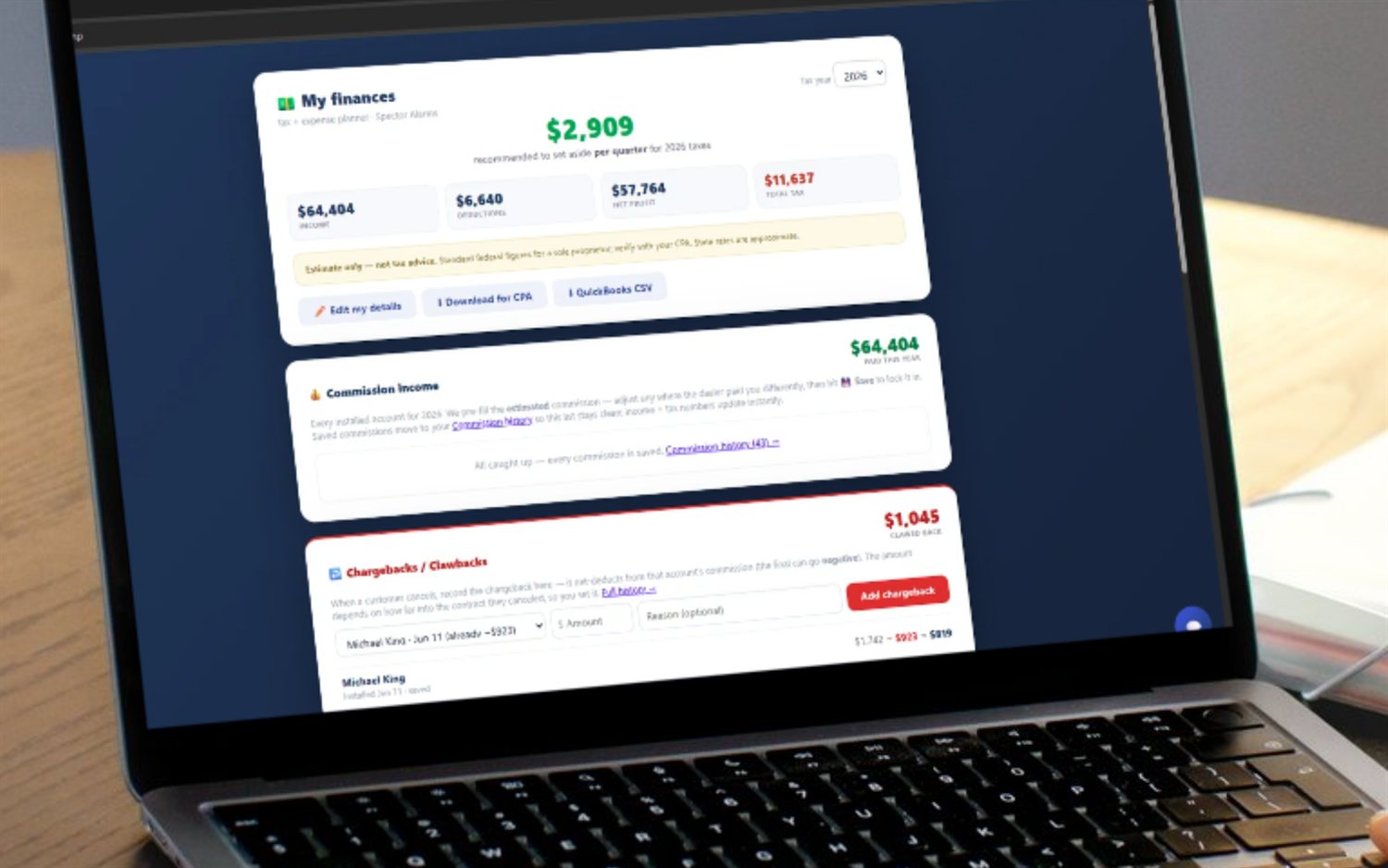
A pay structure built on advances against future premium is exactly the sort of thing a notes app cannot survive. Most agents find out they were wrong about a month two months later, when a chargeback lands on a week they had already spent. FieldStacker keeps the money in the same app you knock with:
You are paid a percentage of the annualized premium on the policy, at whatever contract level you hold with that carrier. Annualized premium is the monthly premium times twelve, so a 58 dollar a month policy is roughly 696 dollars of annualized premium, and a 100 percent contract on it is roughly 696 dollars of first-year commission. Street-level final expense contracts are commonly quoted somewhere in the 80 to 120 percent band, with higher levels released as you produce or as you take an agency contract, and captive or lead-provided models paying materially less in exchange for supplying the leads. It is not a percentage of the face amount and it is not a flat per-policy fee, which is why two agents writing the same number of cases can have very different months.
Your contract level is the percentage of annualized premium the carrier pays you, and it sits inside a hierarchy. Your upline holds a higher level and earns the difference between the two as an override, which is how agencies and IMOs make money. Street level is the ordinary starting contract an independent agent gets without a special arrangement. Two questions matter more than the number itself: does the level apply to every product or only some, and what is the release policy — if you want to move to a different IMO later, many will not release you for a period of months, during which you cannot write that carrier at all under a new upline. Ask about release before you sign, not after.
Both models exist and the choice matters enormously. Most carriers will advance a portion of the first-year commission once the policy is issued and the first draft clears — a common shape is a percentage of six, nine or twelve months of premium, paid daily or weekly. As-earned means you are paid each month as the customer actually pays. Advancing gets cash in your hand fast, which is how most agents fund next week's leads, but every advanced dollar is a dollar you owe back if the policy stops paying inside the window. Newer agents with unstable persistency often end up better off on a smaller advance or as-earned than they expect.
More than most trades, and faster. The first draft failing so the policy never places. The policy lapsing inside the advance period. The client using the free look window, typically 10 to 30 days depending on the state and the policy, to cancel. Underwriting declining a case you already submitted. A rescission inside the two-year contestability period when the application turns out to have understated a health condition. And a replacement, where another agent rewrites your client and your policy lapses as a result. In every case the unearned portion of what you were advanced comes back out of you, and a bad stretch can leave a negative balance with that carrier.
A little, and far less than the recruiting pitch usually implies. Many final expense whole life products pay a small renewal in the years after the first — figures in the low single digits up to roughly ten percent of premium are typical, often only for a defined number of years, and some products pay effectively nothing after year one. That is nowhere near the recurring monthly revenue of an alarm or a service contract. Two questions decide whether it is real money: does it vest, and does it survive you terminating with that carrier or leaving the IMO. Unvested renewals are a retention device, not compensation.
In the independent model you do, and it is the largest single expense in this business. Fresh direct mail cards commonly run in the region of 25 to 45 dollars each, aged leads a fraction of that, and social leads somewhere between — prices move constantly by vendor and market, so treat those as orientation and get current numbers. Many IMOs extend a lead credit line, which is exactly what it sounds like: you order now and it is recovered from your commission later. Combine a lead balance with a chargeback and an agent can genuinely work a full week and end it owing money. That is not a scandal, it is the arithmetic of the model, and it is the reason the tracking matters.
Log the case, net the lapses, record the lead cost, watch the miles and the tax set-aside build. 14-day free trial, no credit card, flat month-to-month.